

Pressure Has A Way Of Revealing Things
Most of us like to believe we think rationally; then pressure arrives. A deadline moves closer. A difficult conversation appears on the calendar. Someone is unhappy. A decision needs to be made. Expectations increase. And suddenly our thinking changes.
The future looks more threatening, mistakes feel bigger, options seem fewer. What felt manageable yesterday now feels overwhelming.
It's easy to assume pressure creates these thoughts. I don't think it does. More often, pressure reveals thinking that was already there.
Pressure Narrows Attention
When we feel under pressure, our attention naturally becomes more focused and that can be useful. It helps us prioritise, solve problems, and respond to challenges. The difficulty is that pressure also tends to amplify existing patterns.
Someone who already worries about disappointing people may become even more concerned with keeping everyone happy. Someone who places high expectations on themselves may become increasingly critical. Someone who believes they must handle everything alone may become less willing to ask for support.
Research into cognitive biases suggests that stress and pressure can influence how we interpret information and make decisions. This helps explain why familiar thinking patterns often become more pronounced when we feel under pressure.
The pressure hasn't created the belief; it has simply made it easier to see.
The Stories Become Louder
Think about the thoughts that appear most often when life feels challenging.
Perhaps they sound familiar:
"I should be coping better than this."
"I can't let anyone down."
"It's all my responsibility."
"I don't have time to stop."
Under pressure, these thoughts often become more convincing because emotional intensity gives them more authority. The thought feels true. The meaning feels factual. And before we realise it, behaviour begins organising itself around that belief.
This Is Where Patterns Become Visible
One of the reasons pressure can be such a useful teacher is that it exposes patterns we may not notice during calmer periods.
When things are going well, many beliefs operate quietly in the background. Under pressure, they step forward.
One person responds by working harder because achievement feels closely linked to self-worth. Another finds it difficult to ask for support because independence has become part of their identity. Someone else avoids a conversation that needs to happen because disagreement feels far riskier than silence.
The situation matters; the interpretation matters too, because what we believe influences how we respond.
Pressure Doesn't Change Who You Are
Many people dislike who they become under pressure. They become impatient, controlling, withdrawn, overly responsible, highly self-critical.
But those responses are rarely random. They usually point towards a belief, assumption, or rule that has been operating for some time. Seeing that pattern is valuable because once you recognise it, you can become curious about what sits underneath it.
What am I believing right now?
What feels threatened?
What am I trying to protect?
Those questions often reveal far more than the situation itself.
Awareness Creates Choice
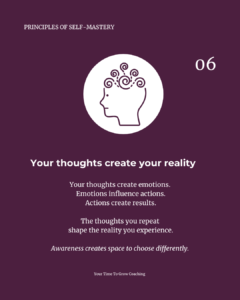 This month's theme is that our thoughts create our reality.
Pressure gives us an opportunity to see that process more clearly:
A circumstance happens.
Meaning is created.
Emotion follows.
Behaviour responds.
The cycle moves quickly enough that it often feels automatic. Awareness slows the process down. It allows us to recognise that what we are experiencing is not only the circumstance itself, but also the interpretation attached to it. That awareness creates space, and space creates choice.
A Different Way To View Pressure
Rather than seeing pressure as the problem, it can be useful to view it as information. Pressure highlights where our thinking becomes rigid and exposes the assumptions we rely on. It reveals the rules we follow without realising it. Seen this way, pressure becomes less about what is happening around us and more about understanding what is happening within us.
A Next Step
This is exactly the work we explore inside Taking Off the Armour and The Arena.
We're not trying to eliminate pressure from life, but learning how to recognise the thinking patterns that appear when pressure arrives.
Because once you can see the pattern, you have more choice about whether you continue following it.
Closing Reflection
The next time you feel under pressure, pay attention to the thoughts that appear first.
What might they be revealing about the beliefs you have stopped questioning?