
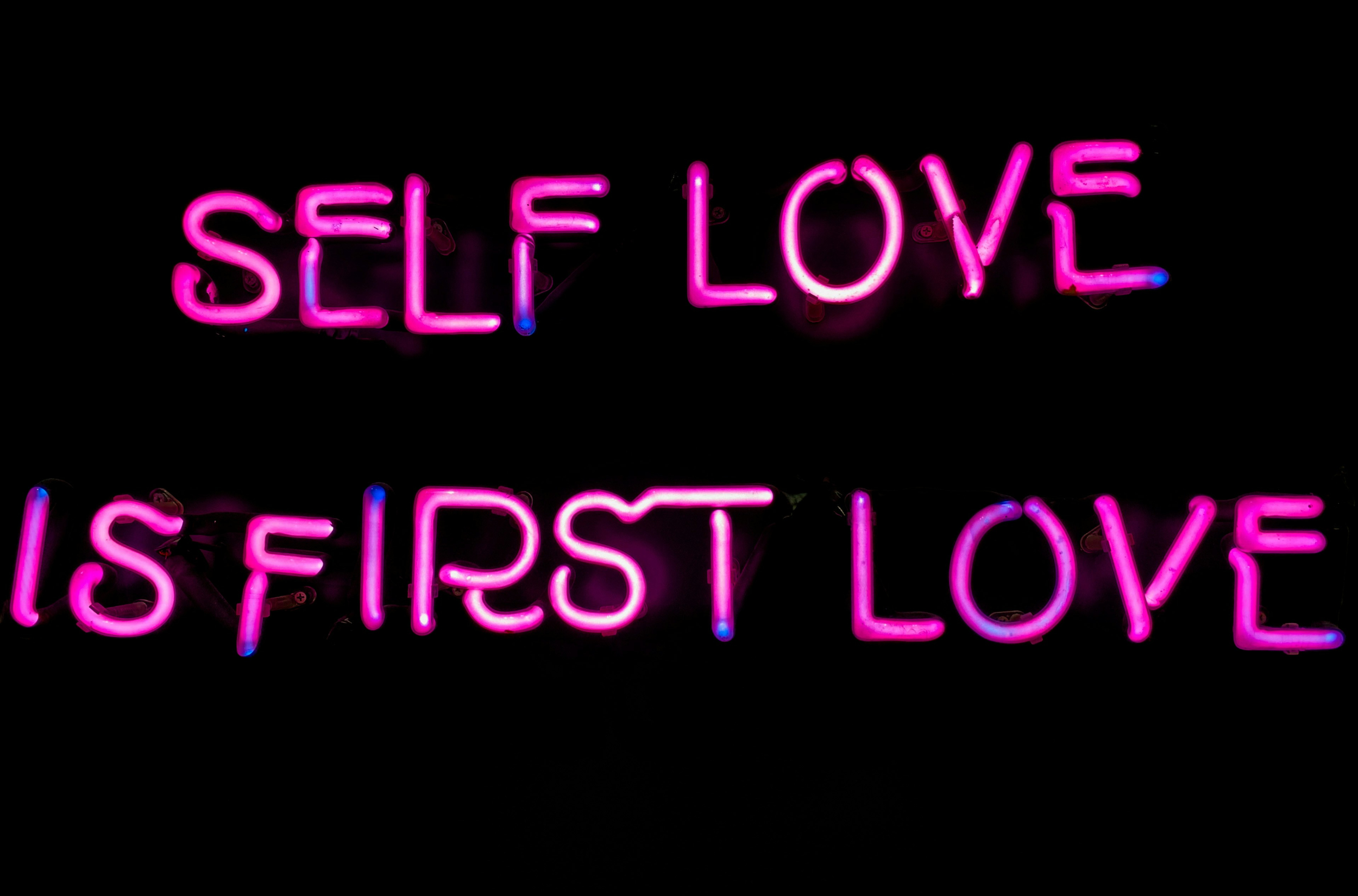
On 31 October, I went to see Anita Moorjani, and something she said has stuck with me ever since.
“Self-love is the rejection of self-loathing.”
I wrote about those words last week, particularly how often we reject ourselves before anyone else has the opportunity to do so. How our inner critic whispers some invented story, we believe it, and before we know it we've talked ourselves out of something we wanted.
Anita also spoke about making choices from love rather than fear, and I thought I'd understood what she meant.
Apparently, the universe wasn't quite finished with that lesson because over the past week, I've found myself coming back to the same question in all sorts of places. In my relationships, in my business and, perhaps most uncomfortably, in the way I've been approaching my health.
And I've started to recognise just how often I've made my own love and acceptance conditional on getting the results I want.
When love comes with conditions
I've been thinking about some of the messages I absorbed growing up.
There was a lot of attention given to dieting, weight and body size (it was the 80's/90's!!). There were comments about how people looked and expectations about how we should behave. As a teenager, I experienced some hurtful remarks about my own body, and those experiences didn't simply disappear when I became an adult.
I think somewhere along the way I learned that being acceptable was connected to meeting expectations: if I behaved in the right way, looked the right way or achieved what was expected of me, then everything was fine; if I didn't, perhaps something was wrong with me.
I don't think I would have described it like that at the time. These beliefs can become so familiar that we don't even notice we're carrying them, and this week, I've been recognising how that old story has followed me into adulthood, particularly when it comes to my weight.
When the number on the scales goes down, I feel pleased with myself. Successful, even. When it goes up, I can feel that familiar disappointment creeping in.
It's not working. What's the point?
And sometimes that disappointment is enough for me to ease off the very habits I've been trying to establish. Then, of course, I criticise myself for not being consistent (it's a rather exhausting arrangement when you think about it).
What if the problem isn't a lack of discipline?
I've spent a lot of time reflecting on why I sometimes stop doing things that I genuinely want to do. I know how to eat well and I know that moving my body, drinking water and nourishing myself are good things to do.
I understand the importance of consistency. So why, when things aren't going as I'd hoped, do I sometimes find myself abandoning those habits? One possibility I've been exploring is that I'm not necessarily rebelling against the goal itself. Perhaps I'm rebelling against the pressure I've attached to achieving it.
When every choice becomes another opportunity to succeed or fail, even something as ordinary as deciding what to eat can start to feel loaded with judgement, and then when the results don't arrive quickly enough, stepping away can bring a strange sort of relief.
For a little while, I don't have to try so hard. I don't have to meet the expectations. I don't have to keep proving that I'm doing well. Of course, that relief doesn't usually last, because then the inner critic has something else to complain about!
I recognise this pattern in my business too. High expectations, disappointment when the results don't match, questioning whether something is working and sometimes (often!) withdrawing from the very actions that might create the opportunities I want.
Which has made me wonder whether some of what I've called self-sabotage has actually been an attempt to escape the pressure I've been putting on myself. It's an interesting possibility, and one I'm still exploring.
Can I accept myself and still want to change?
This has been one of the biggest questions for me this week. I want to lose weight, and I also have health reasons for wanting to make changes; underneath this is a desire to be healthier and under that, a desire to love and accept myself.
For a long time, I've struggled with the idea that accepting my body as it is might somehow mean giving up on wanting it to change: if I love myself at this weight, will I stop trying? If I'm happy with who I am, where does the motivation to improve come from?
The same actions, a different intention
I'm beginning to see that I've been treating acceptance and change as though they're opposites. I can acknowledge where I am today without deciding that something is wrong with me; I can want to lose weight without making my current weight a measure of my worth; and I can take responsibility for my health without using criticism and shame to motivate myself.
Actually, when I think about the people I love most, this seems rather obvious.
I don't withdraw my love from my children when they make a mistake or don't achieve something they were hoping for. I might encourage them, support them, help them reflect or hold them accountable, but my love for them isn't dependent on the result. So why have I so often treated myself differently?
What does loving yourself actually look like?
Something else happened this week that brought all of this into focus.
A friend was telling me about her new partner and some of the thoughtful things he does for her. Little gestures, like making sure she has snacks she enjoys or a warm dressing gown ready when she needs it.
Nothing particularly extravagant. Just someone paying attention to what would make another person feel cared for. I found myself thinking about how lovely that was.
And then I wondered how often I offer myself that same consideration. Not the grand gestures or occasional treats, but the everyday things that say, I matter enough to be looked after.
Later that day, I stopped and bought myself some water that cost £2 because I had forgotten my bottle. Now, I appreciate that doesn't sound particularly momentous but for me, it was a small example of choosing to meet a need without immediately questioning whether I should spend the money or whether I really deserved it.
It made me think about all the other ways I can practise caring for myself:
- Preparing a nourishing lunch because I know I'll need one.
- Drinking water throughout the day.
- Moving my body because I want it to be healthy and strong.
- Making time for rest, pleasure and the things that bring me joy.
- Being willing to make my own needs visible in my relationships, rather than always hoping someone else will notice them.
None of these things requires me to achieve anything first. I don't need to reach a particular weight, earn a certain amount of money or get everything right before I deserve to be cared for.
Choosing love doesn't mean abandoning accountability
This is where I think Anita's message about choosing from love rather than fear becomes especially important because I don't want to abandon my goals. I desire to be healthy; I desire to grow my business, and I desire fulfilling relationships and a life full of wonderful experiences.
I'm not suddenly deciding that consistency, discipline or personal responsibility don't matter; they matter enormously to me, but I'm questioning the place from which I've sometimes been approaching them.
I'm beginning to recognise how differently I approach things depending on what's motivating me.
With my health, I can choose to nourish and care for my body because I value it, rather than allowing the number on the scales to determine how I feel about myself.
In my business, I want to show up because I believe in the work I do and the difference it makes, without needing every result to prove that I'm successful.
And in my relationships, I'm learning to pay more attention to my own needs and values, rather than automatically making decisions based on how someone else might respond.
The actions might look remarkably similar from the outside but the experience of taking them can be very different and when the results aren't what I hoped for, I want to be able to look at what's happening, make adjustments and continue caring for myself, rather than turning disappointment into another reason to withdraw that care.
I can be accountable without being unkind (and creating a shame storm).
Inviting yourself into a different possibility
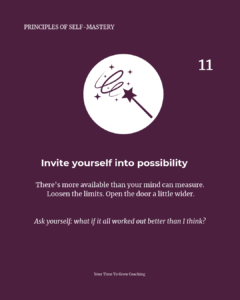 November's Self-Mastery Principle is Invite Yourself Into Possibility, and I hadn't expected self-love to become such a significant part of that conversation.
But the more I reflect on it, the more connected they seem.
When we believe we have to earn our own acceptance, we can spend an enormous amount of energy trying to become good enough. And when we inevitably fall short of our expectations, we reinforce the very beliefs that keep us stuck.
What might become possible if we stopped making our love conditional on the results?
Perhaps we'd be more willing to try things without needing to guarantee success. Maybe we'd find it easier to recover from disappointment, recognise our progress and make choices that genuinely support the lives we want. We might even stop using our goals as evidence that we're not enough yet.
Releasing the conditions we place on ourselves
I've also been thinking about my word for 2027: Release.
I'm beginning to understand that release doesn't have to mean letting go of my ambitions, my goals or my commitment to becoming the person I want to be.
It might mean releasing some of the pressure and judgement I've attached to them. Releasing the idea that I need to achieve a particular result before I'm acceptable or the habit of treating disappointment as a personal failure. And certainly releasing the belief that being hard on myself is somehow necessary for me to grow.
I can still show up, be consistent, be accurate and trust the process. I can still want things to change AND I can choose to pursue those changes from love.
And perhaps the most important realisation I've had this week is this:
I can hold myself accountable for how I care for myself without making my love conditional on the results.
I'm not suggesting I'll suddenly get this right every day. I'm quite sure my inner critic will have plenty more to say on the subject! However, I can become aware of the old story, accept what's happening and choose how I want to respond, and I can keep coming back to that choice.
So, as you go about your week, I wonder whether there's an area of your life where you've been withholding your own kindness until you've achieved something.
What might change if you chose to love yourself now, rather than waiting until you felt you'd earned it?