

Two People Can Experience The Same Thing And Leave With Different Realities
Imagine sending a message and not getting a reply.
One person thinks:
They’re annoyed with me.
Another thinks:
They’re probably busy.
The circumstance is identical. The emotional experience is not.
This happens constantly: a difficult conversation, unexpected feedback, plans changing at the last minute or someone being short with you. Most of us assume we are reacting to what happened.
Often, we are reacting to the meaning we created around what happened.
Circumstances Happen First
Much of life arrives without asking permission. Emails land, meetings run badly, people say things we were not expecting. Plans change, someone forgets something important or decision goes against us. These events are part of being human.
What happens next is where things become more interesting. Because very quickly, our minds begin answering a question:
What does this mean?
Most of this process happens automatically, which means, we rarely notice it happened.
Meaning Creates Emotional Experience
Consider receiving feedback. One person experiences:
I’m failing.
Another experiences:
This is useful information.
Those interpretations create very different emotional experiences. One may create anxiety. The other may create curiosity.
Emotion influences attention.
Attention influences behaviour.
Behaviour influences outcomes.
This is part of the reason people can experience similar situations while living completely different realities. The meaning changes the experience.
We Learn Meanings Over Time
The meanings we create are not random; they are shaped through experience. If you learned that mistakes led to criticism, feedback may feel threatening. Or if being responsible became important early on, asking for help may feel uncomfortable. If approval felt important, someone’s disappointment may carry far more emotional weight than the situation itself requires.
Over time, these interpretations become familiar. Familiarity creates speed. Speed makes interpretation feel factual and eventually we stop recognising:
This is the meaning I created.
And start experiencing:
This is simply true.
Meaning Influences Behaviour More Than We Realise
Imagine believing: If I slow down, everything falls apart.
That meaning creates pressure which then changes behaviour. You continue working despite exhaustion, you struggle to delegate, and you remain available when capacity has already been exceeded.
Now imagine a different interpretation:
Rest helps me function better.
Very different behaviour follows.
Neither thought magically changes circumstances. What changes is how you respond to them. And repeated responses shape the reality you experience over time.
Awareness Creates Space
There can be pressure to immediately replace unhelpful thinking with more positive thinking. I don't think this is usually where change begins.
More useful questions tend to be:
What meaning did I create here?
Is this the only explanation available?
What happens if I stop treating this interpretation as fact?
You do not need to immediately change the meaning. You simply need enough awareness to recognise that meaning exists. Because once you can see it, more choice becomes available.
A Different Way To Look At Your Thinking
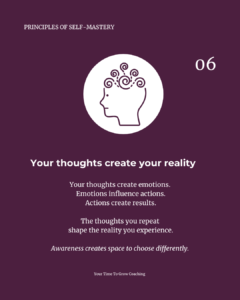 This month I’m exploring the idea that our thoughts create reality.
Not because thoughts magically produce outcomes but because thoughts influence meaning, which shapes emotions, which influence behaviour. And behaviour gradually creates the lives we experience.
Which creates an interesting question:
Where in your life have you confused interpretation with fact?
A Next Step
This is exactly the work we explore inside Taking Off the Armour and The Arena.
Learning how to recognise the patterns shaping your experience before they automatically shape your decisions.