
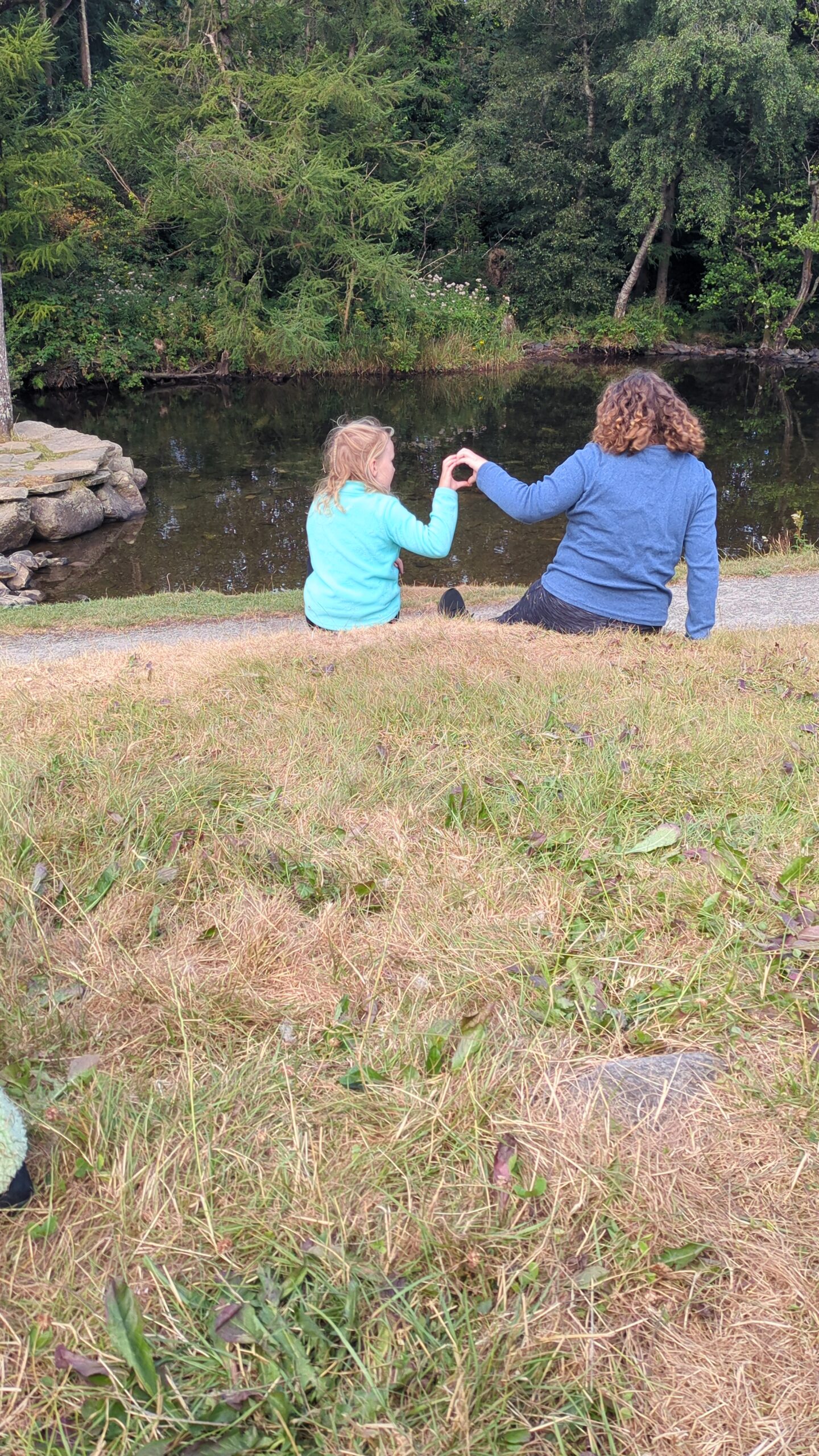
I didn’t realise how quickly I would put my armour back on. Last week, the girls and I went camping for a few days, nothing fancy, one tent and no screens. There was a river running through the campsite and we had books, crochet, cups of steaming hot chocolate and long evenings where everyone seemed happy just being where they were.
The girls played for hours, splashing around in the river and making friends with other children. I sat nearby crocheting, pottering around the camp or simply watching them.
As the responsible adult I still had to make sure everyone was fed, safe and had clean clothes to wear. I was still carrying responsibility...but it felt... easy.
There were still things to do, but I wasn't carrying everything in my head at the same time. I wasn't constantly scanning for the next problem to solve or mentally writing tomorrow's to-do list while trying to enjoy today. I was simply there.
We slept for nearly ten hours every night. We went to bed early, woke up with the sun and somehow the days felt spacious. Then we came home.
Home Changed Something
The temperature had jumped from a lovely 19 degrees to over 35. We unpacked the car, walked through the front door, and before I'd even had a chance to sit down, something shifted.
I walked into the house, and all I could see were jobs: things to sort, fix, clean and things I'd forgotten before we'd gone away.
The feeling of spaciousness disappeared almost instantly. I hadn't consciously decided to become stressed. I hadn't looked around and thought, right, time to carry the world again.
It happened automatically. I slipped straight back into a familiar way of thinking.
The Story Took Hold Again
I have to do it all. That thought is so familiar that, until recently, I wouldn't even have noticed it.
I'd have assumed I was overwhelmed because there was too much to do. This time something felt different; yes, there were jobs to do and it was incredibly hot and we'd just returned from holiday, but the intensity of what I was feeling wasn't coming from the washing or the unpacking. It was coming from the meaning I was giving it all.
Without even realising it, I'd put my armour back on.
I refused help because I was irritated that I had to ask for it (which makes very little sense when I write it down!). Sure, I wanted help, I just didn't want to need it.
I found myself huffing around the house, feeling frustrated that I was carrying everything, while giving everyone around me the impression that I wanted to carry everything. Then I snapped at the girls for not helping. Except... I hadn't really asked them to.
It's Not That I Don't Know Better
As I reflected on it later, I realised very little had actually changed. The girls were still the same girls they'd been on the campsite; I was still the same mum. The responsibilities hadn't dramatically increased.
What had changed was my thinking. At the campsite there wasn't the constant visual reminder of everything that could be done.
At home, every room seemed to offer another job, every unfinished task invited another thought and every thought reinforced the familiar belief that it was all mine to carry.
A year ago I probably wouldn't have questioned any of this, I'd simply have concluded that being at home is stressful. Now I'm not so sure. I'm beginning to see that home isn't the problem; the armour is.
Or perhaps more accurately, the old protective pattern that tells me I have to keep everything together, stay on top of everything and make sure everyone else is OK before I can properly relax.
The interesting part is that I didn't stay there, I still slipped into the pattern but I noticed it sooner.
I took breaks and I stopped to ask myself what was happening. I recognised that the pressure I was feeling wasn't entirely coming from my circumstances. That might not sound like much but to me, it feels huge.
We always have a choice
I don't believe this work is about reaching a place where you never wear your armour again. Life will always present moments that pull us back towards familiar patterns. The difference is that we begin to recognise them. We become curious instead of completely consumed by them and we can catch ourselves halfway through the story rather than living inside it for weeks.
I don't want to spend the rest of my life believing that the moment I walk through my front door I have to carry everything on my own. I want to ask for help without feeling like I've failed and I want to look around my home and see my home before I see my to-do list.
When I reflect, I don't actually believe I have to do everything. If you'd asked me the next day whether the washing could have waited, or whether the girls could have helped more, I'd have said, "Of course."
That's the strange thing about these patterns, the options don't disappear, they just become incredibly difficult to see when you're in them. It's as though the story gets hold of the steering wheel.
In that moment, asking for help doesn't feel like one choice among many. It feels uncomfortable. Rest feels like something that has to be earned. Leaving jobs until tomorrow feels irresponsible, even though another part of me knows full well that it isn't.
Looking back, I can see that none of those thoughts were facts, they were simply the old story I'd slipped back into. I wasn't just carrying the washing or unpacking. I was carrying an unspoken expectation that everything was my responsibility. It's very difficult to set healthy boundaries when that's the story you're living inside.
That's what I understand about armour: it doesn't stop us knowing better, it just makes one version of reality feel so convincing that, for a while, we can't see anything else.
The Difference This Time
The difference this time was that I noticed, not straight away and certainly not before I became snappy and spent a while huffing around the house, but sooner than I would have done a year ago and perhaps that's enough for now.
Writing this has reminded me how easy it is to believe we've gone backwards when an old pattern reappears (and, I don't think that's what happened at all; I think I simply noticed it sooner).
That's the work we do inside Taking Off the Armour. We don't try to become different people. We become more aware of the stories and protective patterns that have been running our lives, so we have more choice about what happens next.
If you've been recognising yourself in these blogs, I'd love to invite you to join us.
You can find out more about Taking Off the Armour here.