

The Thoughts We Notice Are Rarely The Ones Running The Show
Most people can recognise a new thought fairly easily. The difficult thoughts to notice are usually the ones that have been around for years, because repetition changes the way we experience them.
Something repeated often enough stops sounding like an opinion and starts feeling like part of reality. You probably don’t stop during the day and consciously think:
“I should always cope.”
“I must not disappoint people.”
“I’m behind.”
“This is just who I am.”
More often, these ideas sit in the background, influencing decisions without attracting much attention. That is usually where the interesting work begins.
Repeated Thinking Starts Feeling True
Most of us have experienced this without realising it.
You tell yourself often enough that you are bad with money, difficult, not disciplined, too sensitive, too emotional, too much, not enough, and eventually those statements stop sounding like thoughts.
They begin functioning more like facts. Once something feels factual, we rarely investigate it. We organise around it, adjust our behaviour to accommodate it and create lives that fit around the story.
This is part of the reason two people can experience similar circumstances and walk away with completely different experiences. Circumstances matter. The meaning we create from them matters too.
Meaning Creates Emotional Experience
 A difficult conversation happens. One person thinks:
“They are upset with me.”
Another thinks:
“That conversation was uncomfortable.”
Same event. Different meaning. Different emotional response.
That emotional response influences attention. Attention influences behaviour. Behaviour shapes outcomes.
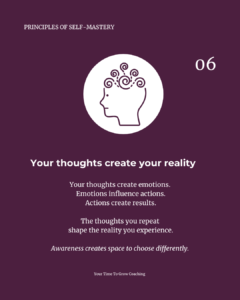
This is one of the reasons thoughts matter so much. Don't get me wrong, not every thought instantly creates reality, but repeated thinking influences how we interpret, feel, respond, and ultimately live.
The process is usually so fast that we experience the emotional response long before we notice the thinking underneath it.
Familiar Thinking Becomes Invisible
The thoughts shaping your life are frequently the most familiar. They could look/sound like assumptions you stopped noticing or expectations you stopped questioning. The internal commentary that has existed for so long it now feels like part of your personality.
Many women I work with are highly aware in lots of areas of life, yet still discover beliefs operating underneath the surface that they have not consciously questioned for years.
They don't lack awareness; it's just that familiarity reduces visibility and we rarely examine what feels normal.
Awareness Changes The Relationship
There can be pressure in personal development to immediately replace negative thoughts with positive ones. I don’t think that is where most meaningful change begins. The first step is usually much simpler.
Begin with the thought. How often does it appear? What decisions, emotions, or behaviours tend to follow?
Curiosity often creates more change than criticism. Because once you see something clearly, you are no longer entirely inside it. You can begin asking different questions.
- Where did this idea come from?
- Is it always true?
- What happens when I stop automatically agreeing with it?
A Different Question
This month I’m exploring the principle that our thoughts create our reality. I don't believe that thinking positively magically changes circumstances, however, I do believe that the thoughts we repeatedly believe influence emotions, attention, behaviour, and ultimately the lives we experience.
Which leads to a useful question:
What thought has become so familiar that you stopped noticing it was there?
A Next Step
This is exactly the work we explore inside Taking Off the Armour and The Arena.
Not changing who you are.
Learning how to see more clearly what has been shaping your decisions all along.