

Capability is often celebrated.
Being reliable, competent, and self-sufficient earns praise early on, particularly for high-functioning women. We’re trusted, depended on, and seen as strong.
Over time, that capability can quietly turn into armour.
Not in an obvious or dramatic way. Instead, it settles in gently, wrapping itself around us as protection. What once supported us begins to restrict us, and many women find themselves carrying far more than is sustainable without fully realising how it happened.
How Capability Turns Into Protection
Capability doesn’t become armour overnight. It forms through experience.
Perhaps being competent kept things calm. Maybe handling everything yourself reduced disappointment. In some environments, having it “all together” earned approval or avoided conflict. Over time, relying on yourself felt safer than relying on others.
In this way, capability becomes more than a skill; it becomes a strategy. It protects you from vulnerability, from having to ask for help, from risking being let down, and from appearing as though you don’t have it all handled. The behaviour makes sense. It worked once. That’s why it stayed.
The Hidden Cost of Always Being Capable
When capability becomes armour, the cost is often subtle at first.
- Fatigue may linger even after rest.
- Resentment can creep into relationships.
- Receiving support feels uncomfortable or unnecessary.
- Responsibility accumulates until everything seems to rest on your shoulders.
None of this means you’re doing something wrong. It means a protective strategy is doing exactly what it learned to do. What once kept you safe may now be keeping you isolated.
Why High-Functioning Women Are Especially Prone
High-functioning women are frequently rewarded for this pattern. Competence is praised. Independence is admired. Emotional self-sufficiency is expected. The ability to “just get on with it” becomes part of identity rather than a choice. From the outside, it looks like strength; internally, it often feels like pressure.
There’s little room to ask what you need when the focus is always on what needs doing next. Over time, the armour thickens. Slowing down starts to feel irresponsible. Vulnerability feels risky. Receiving feels unfamiliar.
Awareness Before Action
One of the most important principles of self-mastery is awareness before action.
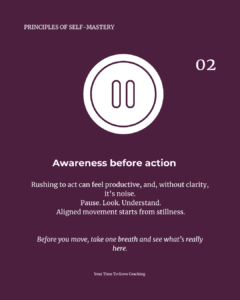
Before trying to soften this pattern, it helps to notice it.
Rather than asking, How do I stop being like this?
Try asking, What is my capability protecting me from right now?
For many women, the answers include fear of burdening others, fear of losing control, or fear of being disappointed again. Naming this doesn’t weaken you. It restores choice.
Awareness allows you to see when capability is genuinely supportive and when it has slipped into armour.
Capability Isn’t the Problem
It’s important to say this clearly: capability itself is not the issue.
Being skilled, competent, and reliable is not something to unlearn or give up. The work lies in noticing when capability is being used as a reflex rather than a resource. Armour serves a purpose in moments of threat.
Worn constantly, it becomes heavy. Self-mastery is about recognising when you no longer need to live inside it.
Letting Capability Become a Choice Again
I am not suggesting becoming helpless or dependent; I am inviting you into the idea of creating flexibility.
That flexibility might look like allowing someone to help, even if they do it differently. It could involve admitting you don’t have the answer straight away. Sometimes it means resting without first proving you’ve earned it. These moments don’t diminish strength; they expand it.
When capability becomes a choice rather than an obligation, energy returns, and support becomes possible. Relationships soften. Strength stops being something you perform and becomes something you embody.
The Self-Mastery Invitation
Self-mastery asks a quiet but powerful question:
Who am I when I don’t need to prove my capability?
For many women, this question brings discomfort. That’s understandable. Armour exists for a reason. It formed when something felt unsafe, uncertain, or unsupported.
And, you are no longer the person you were when this strategy first developed. You have more awareness, more internal support, and more choice available to you now.
Capability doesn’t need to disappear, it simply needs to become optional. And when it does, something shifts. You move through the world with less weight, more connection, and a deeper trust in yourself.
If you recognise yourself here, you’re not broken.
You adapted.
And adaptation can evolve.
If you’d like to explore your own protective strategies further, the Protective Strategies Quiz offers a gentle way to understand your patterns and work with them consciously.